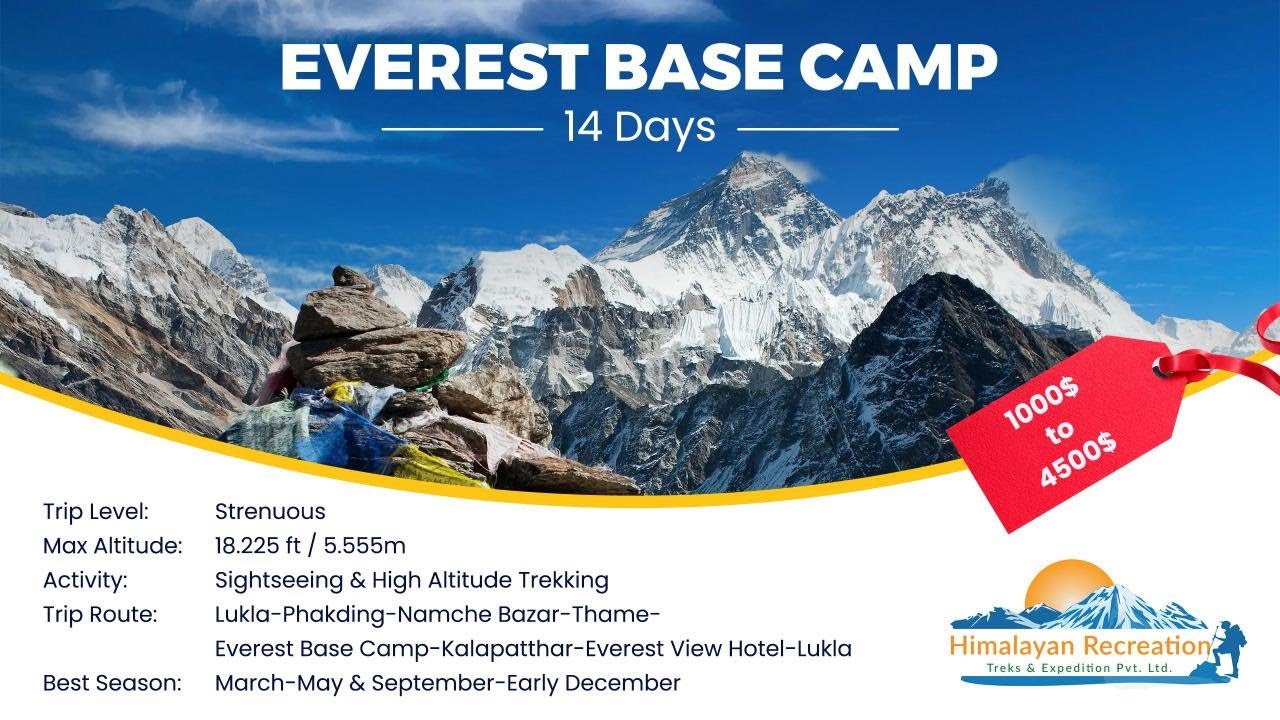
When is the best time for the Everest base Camp 12 days Hike?
The Everest Base Camp 12-day hike is possible throughout the year, but the experience varies by season. Spring (March–May) is widely considered the best time, offering mild temperatures, stable weather, blooming rhododendrons, and clear mountain views. Autumn (September–November) is another excellent season, known for crisp air, clear skies, and outstanding visibility—ideal for trekkers who want reliable conditions and spectacular scenery, though it does attract larger crowds.
Summer/Monsoon (June–August) brings regular rainfall, slippery paths, and limited mountain views, but the trails are beautifully green and much quieter. Winter (December–February) is the coldest and most challenging season, with freezing temperatures and potential snowfall that may block trails or close teahouses. However, experienced and well-prepared trekkers may find winter a rewarding time to explore the Everest region.
What Type of Accommodation Is Provided on the 12 Days Everest Base Camp Trek?
During your 12 Days Everest Base Camp Trek, you’ll stay in locally operated teahouses that offer a warm and authentic mountain experience. The package includes 11 nights of accommodation along the route, carefully selected for comfort and cleanliness.
Here’s what to expect:
- Private Twin-sharing rooms with basic bedding (blankets and pillows provided)
- 3 nights comfortable stay with attached bathrooms in Lukla, Phakding and Namche Bazaar
- Attached hot shower and private toilet in Lukla
- Shared bathrooms at higher altitudes where infrastructure is more basic
Each teahouse has a communal dining area where you can relax, eat, and socialize after a day of trekking. The higher you climb, the simpler the lodges become, but they all provide the essentials for a safe and restful stay.
Extras like hot showers, Wi-Fi, and device charging are available at most lodges for a small additional cost, payable directly. Your guide will assist with arrangements.
What meals and drinks can we Expect during the Everest Base Camp 12-day trek?
Your 12 Days Everest Base Camp Trek Package includes three fresh meals daily—breakfast, lunch, and dinner—with a cup of tea or coffee at each meal.
What You'll Eat:
- The teahouses serve a variety of freshly cooked dishes, including:
- Dal Bhat—the Nepali favorite (unlimited servings!)
- Fried rice, noodles, pasta, momo, chapati, soups, and curries
- Breakfast options: eggs, toast, pancakes, porridge, muesli, and more
We recommend having vegetarian and vegan meals. Anyway, dietary preferences can be accommodated as per your request.
Drinking Water:
- Drinking water is not included in the package.
- However, clean tap water is available at all stops.
- We happily provide water purification tablets on request, so you can refill your reusable water bottle safely and reduce plastic waste.
- Bottled water is available for purchase at extra cost if preferred.
Your guide will help ensure you always have access to safe drinking water throughout the trek.
With Himalayan Recreation, your meals, comfort, and well-being are our priority. We make sure you're well-fed, well-hydrated, and well-rested—so you can fully enjoy your EBC Trek in 12 Days.
How Difficult Is the 12-Day Everest Base Camp Trek?
Our 12 Days Everest Base Camp Trek is considered moderately difficult. You'll be hiking around 5 to 7 hours per day on uneven, rocky trails with frequent ascents and descents. While it doesn’t require technical climbing skills, a good level of physical fitness and mental endurance is essential.
As the trek reaches altitudes above 5,000 meters, the thin air and high elevation add to the difficulty. That’s why our itinerary includes acclimatization days to help your body adjust naturally and safely.
With the right mindset, preparation, and support from our experienced team, anyone in reasonable health can successfully complete this trek—even first-time trekkers.
If you're concerned about difficulty, our guides will pace the trek to your comfort and assist you every step of the way.
What About Acclimatization and Safety on the Everest Base Camp 12 Days Hike?
Acclimatization and safety are our top priorities on the 12 Days hike to Everest Base Camp. You’ll be trekking above 5,000 meters, so we follow a carefully designed high-altitude trekking itinerary that includes 2 rest/acclimatization days—in Namche Bazaar and Dingboche.
Here’s how we ensure your safety:
- Slow and steady pace for proper adaptation
- Well-trained guides to monitor your health daily
- Hydration encouragement and regular health check-ins
- Emergency support with immediate descent or helicopter evacuation if needed (insurance required)
Avoiding alcohol, staying hydrated, and listening to your guide’s advice all contribute to a safe and successful EBC experience.
With Himalayan Recreation, you're trekking with a safety-first team that has years of experience guiding at high altitudes.
How Should You Prepare for the 12 Days EBC Trek?
To get ready for the 12 Days Trek , it’s important to focus on building your stamina and leg strength. We recommend:
- Cardio training: hiking, jogging, cycling, or swimming 3–4 times a week
- Practice hikes: Take 1–2 day hikes with a backpack to simulate trekking days
- Strength training: Especially for legs and core
- If possible, do some hikes at high altitude before your trip
Also, don’t underestimate mental preparation. The trek is long and remote—being ready for adventure and staying positive helps immensely.
Permits required for the EBC 12 Days Trek
There are two different permits needed for the EBC 12-day Trek, which is explained below:
- Sagarmatha National Park Entry Permit: This is the permit required to enter the Sagarmatha National Park, as the trek lies inside the national park, where the Everest region is located. The current cost for foreign nationals is NPR 3,000 (approximately USD 27).
- TIMS Card (Trekkers' Information Management System): The TIMS card is a trekking permit that you need to have to trek to any part of Nepal, which helps manage trekkers' information and ensures their safety. For the Everest region, the cost of the TIMS card for foreign trekkers is approximately USD 20.
What to Pack for the Everest Base Camp Trekking 12 Days?
We have prepared a list of all necessary trekking gear and equipment for the 12 days trekking to Everest Base Camp trekking. You can either buy or rent the equipment and gear for the trek if you do not have it.
- Clothing -Baselayer -Insulation layer -Third layer
- General Trekking gear -Trekking trousers & shirts -Trekking shorts -Waterproof shell jacket and trousers -Underwear
- Headwear: -Hat -Beanie -Neck gaiter
- Handwear & Footwear -Inner Gloves -Outer insulated gloves -Hiking boots -Trekking shoes/sandals -Hiking socks -Warm thermal socks -Gaiters
- Bag and backpackers -Duffel bag -Backpack -Day back -Raincover -Drybag
- Sleeping gear -Sleeping bag -Liner -Earplugs
- Poles & Headgear -Trekking poles -Sunglasses -Headlight
- Important accessories -Water bottle/Hydration bladder -Towel -Pee funnel -Lock -Waterproof bag
- Extra accessories -Camera -Portable charger -Books -Cards -Passport, Money
- Medications & Toiletries: Water purification tablet, Isotonic powder, Diamox, Common Medications, First aid kit, Sunscreen, Baby Wipes, Toiletries, Plasters, Oximeter, Hand sanitizer.
Tipping culture during the 12 days trek in Nepal
Tipping during treks in Nepal is a normal way of showing appreciation to guides, porters, and other service providers. Trekkers usually tip the guides and other people who offer them services and facilities if they are satisfied. The amount of the tip depends on you according to the level of facilities and service you receive.
Do i Need Travel insurance for the 12 days Everest Base Camp Trek?
Yes, Travel insurance is one of the most important elements when embarking on any trip in the Himalayas. As the Everest trek is challenging and includes the risks of high altitude, potential altitude sickness, and other unexpected possibilities, having travel insurance is important and compulsory for the trek.
During the booking process, all the trekkers must provide a copy of their comprehensive travel insurance policy certificate, which should cover all medical and emergency repatriation. The policy should further cover helicopter rescue and evacuation expenses at high altitudes.
Useful info and tips for the 12 Days Everest Base Camp
- Take travel insurance that covers emergency medical evacuation at high altitudes.
- Start a regular exercise routine or do some hikes before the trek to improve your fitness and stamina.
- Drink plenty of water throughout the trek.
- Bring water purification tablets or filters to treat water from taps or streams.
- Walk at your own pace and maintain a gradual ascent.
- Notify your guide in case you experience any symptoms of altitude sickness.
- ATMs are limited along the trekking route so Carry sufficient cash
- Trekking in the spring and autumn seasons is recommended.
- Mobile networks are available in a few places. A local SIM card is available to buy in Kathmandu if you want to have occasional communication.
- It is recommended to carry a power bank.
Lukla's flight Factor: What You Need to Know?
Your 12 days trek begins with a flight to Lukla, which is a small single-landing strip airport surrounded by the high Himalayas. The flight is operated from Ramachhap Manthlai Airport in the pick month (April, May, October, and November) and other months from Kathmandu airport. Anyway, it won't effect your itinerary.
There are chances of flight delays and cancellations during your 12-day Everest trek. Such a weather gets a problem at any time of the year, especially during the monsoon season (late May to early September).
If a Lukla flight delays, you will have to wait until the flight gets rescheduled. and if it is cancelled due to weather, it will be rescheduled for the next day. You will have the option to take a helicopter flight on the same day at the extra cost of about 500 USD-700 USD per head.
So having 1 or 2 days extra is recommended to adjust in case of a Lukla flight delay or cancellation during your trip.
How to Book Your 12 Days Everest Base Camp Trek with Himalayan Recreation?
Booking your 12 Days Everest Base Camp trek with Himalayan Recreation is quick, secure, and traveler-friendly. Whether you're planning ahead or making a last-minute decision, we’ve got you covered!
- Standard Bookings: We recommend booking at least 3–5 weeks in advance to secure Lukla flights, accommodation, and preferred dates. You can book online or contact the Himalayan Recreation team directly. A small (20%) deposit confirms your trek.
- Last-Minute Bookings Available: Need to book on short notice? We accept last-minute bookings up to 24 hours before departure, with 100% full payment required. Availability may vary based on flights and lodge space.
Have questions or want to book now? Reach out to us via WhatsApp or email us anytime.